Designing Quality Mentoring in School Internships Abroad
Text
-
Topic
school internships abroad mentoring music education inter-institutional collaboration intercultural learning teacher professionalization design-based research design principles
-
Target audience
Teacher
-
Learning context
Higher Education
-
Description (learning objectives)
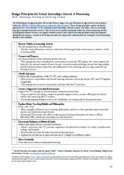
This document presents a set of empirically grounded design principles for mentoring within school internships abroad (SIAs) in music education. Emerging from seven iterative cycles of design-based research conducted within the pan-European, Erasmus+ funded TEAM project, the fifteen principles address key aspects of quality mentoring, including preparing and orienting student teachers, creating supportive learning environments, fostering intercultural and musical dialogue, scaffolding progressive teaching responsibilities, and modelling and encouraging reflective practice. Learning Objectives: - To be able to prepare and orient student teachers for their school internship abroad in a structured and supportive way. - To be able to create a learning environment that supports student teachers' professional and intercultural development during the placement. - To be able to scaffold student teachers' progression from observation to independent teaching in a culturally unfamiliar context. - To be able to facilitate reflective practice and constructive feedback as integral parts of the mentoring process. - To be able to foster intercultural and musical dialogue between the student teacher and the host school community.
-
Time required
45 minutes
-
Author(s)
Malmberg, IsoldeSteinmetz, LaurenChrysostomou, SmaragdaDimitrakoulakos, DemosthenesKreuzwieser, StefanieTriantafyllaki, AngelikiAigner, WilfriedBons, Verena
-
Year
2026
- License
- DOI
-
OEFOS classification
MUSIK - Pädagogik / Vermittlung
-
Related resources
- Is part of Course A: Introduction to Supportive Mentoring in Intercultural Contexts. How to use this OER Course
- Is part of Course C: Facilitating and Supervising School Internships Abroad for Music Education Students. How to Use this Course
- References https://teacher-academy-music.eu/student-mobility/school-internships-abroad
- Handle

Funded by the European Union. Views and opinions expressed are however those of the author(s) only and do not necessarily reflect those of the European Union or the European Education and Culture Executive Agency (EACEA). Neither the European Union nor EACEA can be held responsible for them.
