Introductory Conversation Guide
Text
-
Topic
cultural reflection self-reflection music education school internships abroad intercultural mentoring supervision
-
Target audience
Teacher
-
Learning context
School
-
Description (learning objectives)
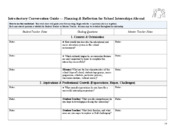
Here you will find a structured reflection and planning guide for student teachers undertaking and mentor teachers supervising a school internship abroad. Designed to support intercultural professional dialogue, it guides both partners through five thematic areas: context and orientation, aspirations and professional growth, roles and participation, communication and feedback, and language and logistics. The guide is intended to be used as part of the preparation for the internship abroad. Learning Objectives: - To be able to articulate mutual expectations and establish a shared framework for navigating the intercultural dimensions of the internship together. - To be able to collaboratively reflect on professional roles and goals, and identify areas for growth within the school internship abroad. - To be able to engage in structured dialogue about teaching practice, feedback, and intercultural communication. - To be able to recognize and address potential challenges related to language, logistics, and cultural adaptation during the placement.
-
Time required
Students and mentor teachers should take some time to prepare for the conversation, reflecting on the questions in advance, about 30 minutes. The conversation itself requires approximately an hour.
-
Author(s)
Malmberg, IsoldeDimitrakoulakos, DemosthenesKreuzwieser, Stefanie
-
Year
2026
- License
- DOI
-
OEFOS classification
MUSIK - Pädagogik / Vermittlung
-
Related resources
- Is part of Course A: Introduction to Supportive Mentoring in Intercultural Contexts. How to use this OER Course
- Is part of Course B: Making the Most of Your School-Internship Abroad. How to use this OER Course
- Is part of Course C: Facilitating and Supervising School Internships Abroad for Music Education Students. How to Use this Course
- Handle

Funded by the European Union. Views and opinions expressed are however those of the author(s) only and do not necessarily reflect those of the European Union or the European Education and Culture Executive Agency (EACEA). Neither the European Union nor EACEA can be held responsible for them.
